
Make access part of the first request
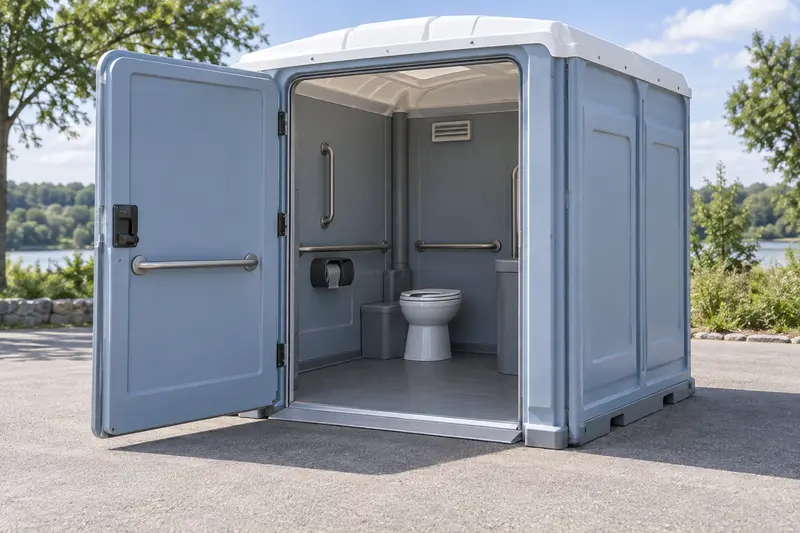
Tell the rental contact that accessible facilities are needed and describe the activity and users. Ask for the features and dimensions of the actual proposed equipment. Do not treat an unusually large cabin as proof of a particular accessibility standard, or assume that every larger unit has the same entrance and interior arrangement.
Review the route as well as the unit
The route from parking or the main activity area matters alongside the restroom itself. Describe surface changes, gates and any obstacles. Have the person responsible for the property review the approach, usable space at the door and surrounding layout. Equipment selection alone cannot certify the accessibility of the entire site.
Keep that space clear during use
A satisfactory initial layout can be changed by furniture, parked vehicles or stored materials. Show the agreed position to the people setting up the property and explain which space must remain available. Include servicing in the plan so a visit does not depend on moving barriers or disrupting the intended user route.
What to confirm about an accessible unit
Request the proposed model’s doorway, interior turning space, entry arrangement and support features. A wheelchair-friendly description and an ADA-compliant specification are not interchangeable. Keep the model information with the event or site plan so the responsible organiser can review the complete accessible route.
Example: a separate outdoor activity area
If indoor accessible restrooms are across steps or inside a building that will be locked, they may not provide a practical option for that outdoor activity. Explain the barrier when requesting equipment; do not count the indoor facility simply because it appears on a venue map.