
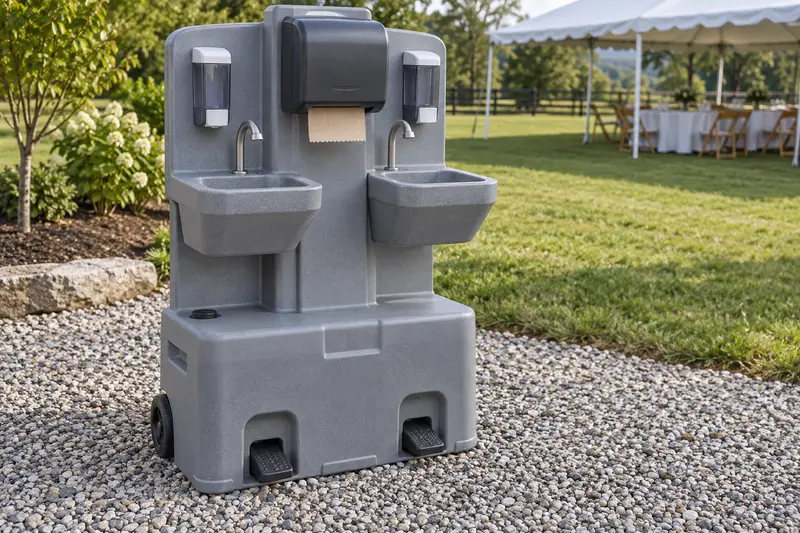
Put soap-and-water washing into the layout
Describe where people will wash after using the toilets and during the activity. A freestanding station may be useful where the chosen cabin has no sink. Locate the washing discussion beside the equipment selection, rather than adding a station after every convenient position has been taken by other site equipment.
Plan supplies through the busiest day
Ask what fresh water, soap, drying supplies and replenishment arrangements come with the proposed station. Explain whether use is steady or concentrated around breaks. A station that is present but without the necessary supplies does not provide the intended facility; agree who to contact when attention is needed.
Distinguish a wash station from a food-service setup
If the request supports food preparation, tell the organiser and rental contact what work will take place. The relevant requirements need checking for that activity; do not assume any portable sink automatically suits every food operation. Keep its position and servicing route compatible with the wider event or worksite plan.
A toilet and a wash station do different jobs
A freestanding wash station provides a separate place for washing; it does not add toilet capacity. Place it on the route people take after leaving the cabins, while leaving room for both doors and queues. Include children, guests and staff when deciding where it will be easiest to use.
Questions for a multi-day booking
Who checks water and consumables between service visits? What should the site contact do if supplies run low? Is additional replenishment included or separately arranged? Resolve those questions before the first day, especially when attendance or working hours change during the rental.